
Ocean observation systems
Distributed sensor networks and autonomous buoys delivering real-time coastal and deep-sea intelligence.
Poseidon Space & Sea Institute unites ocean research with space technology development to deliver mission-ready habitats, resilient life-support ecosystems, and collaborative science platforms—built with global partners and sustained by community support.
1,000+ Crew Capacity
Habitat districts engineered for scientific endurance
24 Resilience Systems
Redundant life-support, power, and mission stability
240 Collaborators
Global research partners advancing shared readiness
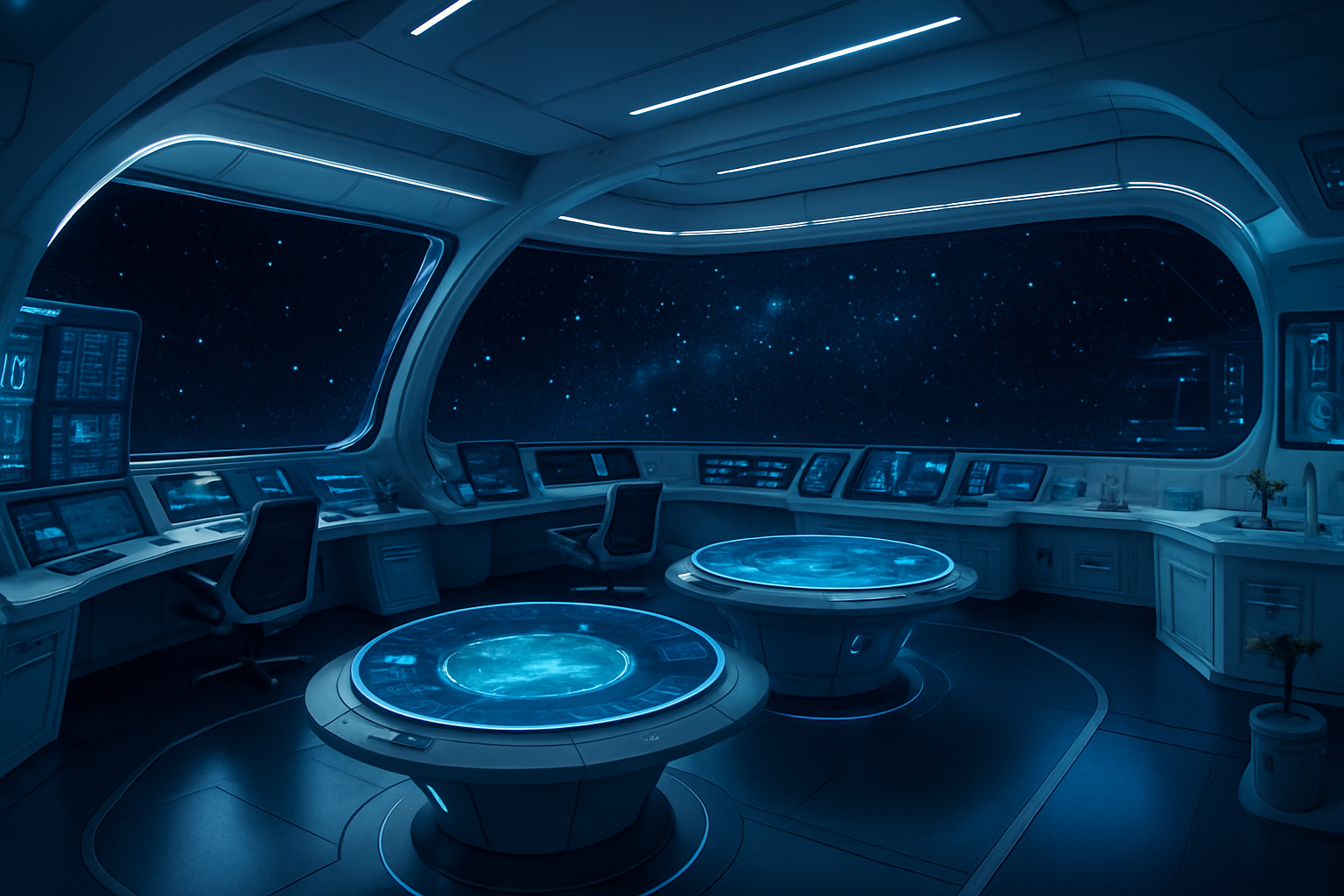
Research pillars
Poseidon Space & Sea Institute advances a tightly integrated research agenda that bridges marine science, aerospace technology, and sustainable engineering. Each pillar is designed for measurable impact, real-world deployment, and collaborative discovery.
Distributed sensor networks and autonomous buoys delivering real-time coastal and deep-sea intelligence.
Low-emission propulsion research for submersibles and orbital and planetary propulsion and technology research.
Integrating orbital imagery and ocean data streams to detect coastal change, biodiversity shifts, and hazards.
Autonomous and remotely operated vehicles built for extreme depths, precision sampling, and infrastructure inspection.
Predictive simulations that connect ocean dynamics with space-based climate intelligence for mitigation planning.
Collaborative studios connecting engineers, oceanographers, and data scientists to accelerate deployable solutions.
Mission support
Your contribution powers ocean observatories, space-enabled climate intelligence, and the next generation of sustainable engineering.
Luxury flagship concept
Poseidon Space & Sea Institute explores a premium civilian‑scientific flagship that blends expansive curved interiors, panoramic observation promenades, and hospitality‑grade finishes with credible systems engineering. This is an aspirational research concept—legally distinct and not tied to any existing franchise—intended to map what a population‑scale exploration vessel could become under sustained technological progress.
The concept prioritizes bright white‑and‑blue materials, serene public districts, wellness and community spaces, and long‑range resilience for thousands of passengers and crew. All modeling remains grounded in current physics and validated subsystem data, framing a megastructure‑like integration path rather than near‑term deployment.
Population‑scale logistics demand high‑Isp continuous thrust and efficient station‑keeping. We examine modular electric propulsion trusses, magnetically shielded thrusters, and scaled plasma concepts within realistic power‑to‑mass and thermal constraints.
Closed‑loop ECLSS evolves into district‑level infrastructure with regenerative air, water, and nutrient loops. We model carbon capture, trace‑contaminant control, and humidity management based on ocean habitat telemetry at megastructure scale.
A flagship vessel requires layered shielding, storm‑shelter zoning, and multi‑loop thermal control to protect large public promenades and medical districts. We evaluate water‑rich composites, variable shielding, and adaptive heat‑rejection fields.
Large habitat districts create distinct residential, research, wellness, and hospitality‑grade public realms. Interconnected modules reduce single‑point risk while enabling acoustically controlled zones and iconic promenade vistas.
Bio‑regenerative agriculture, nutrition labs, and clinical suites support thousands of residents with predictable supply and health resilience. Advanced galleys focus on precision cooking, controlled fermentation, and comprehensive nutrient profiling.
Flagship operations rely on redundant command centers, cross‑strapped avionics, and district‑level isolation. Crew protocols include fatigue‑aware rotations, autonomous fault reporting, and predictive maintenance for thousands of systems.
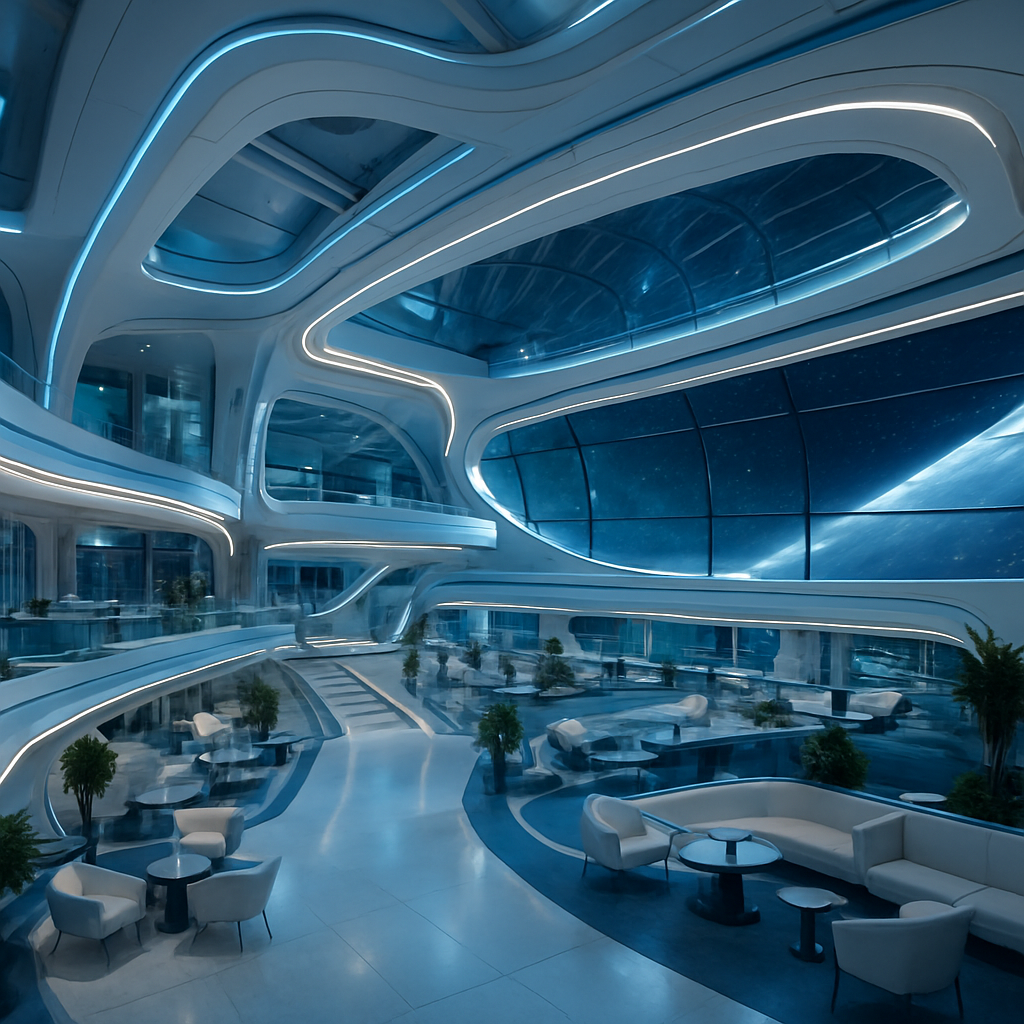
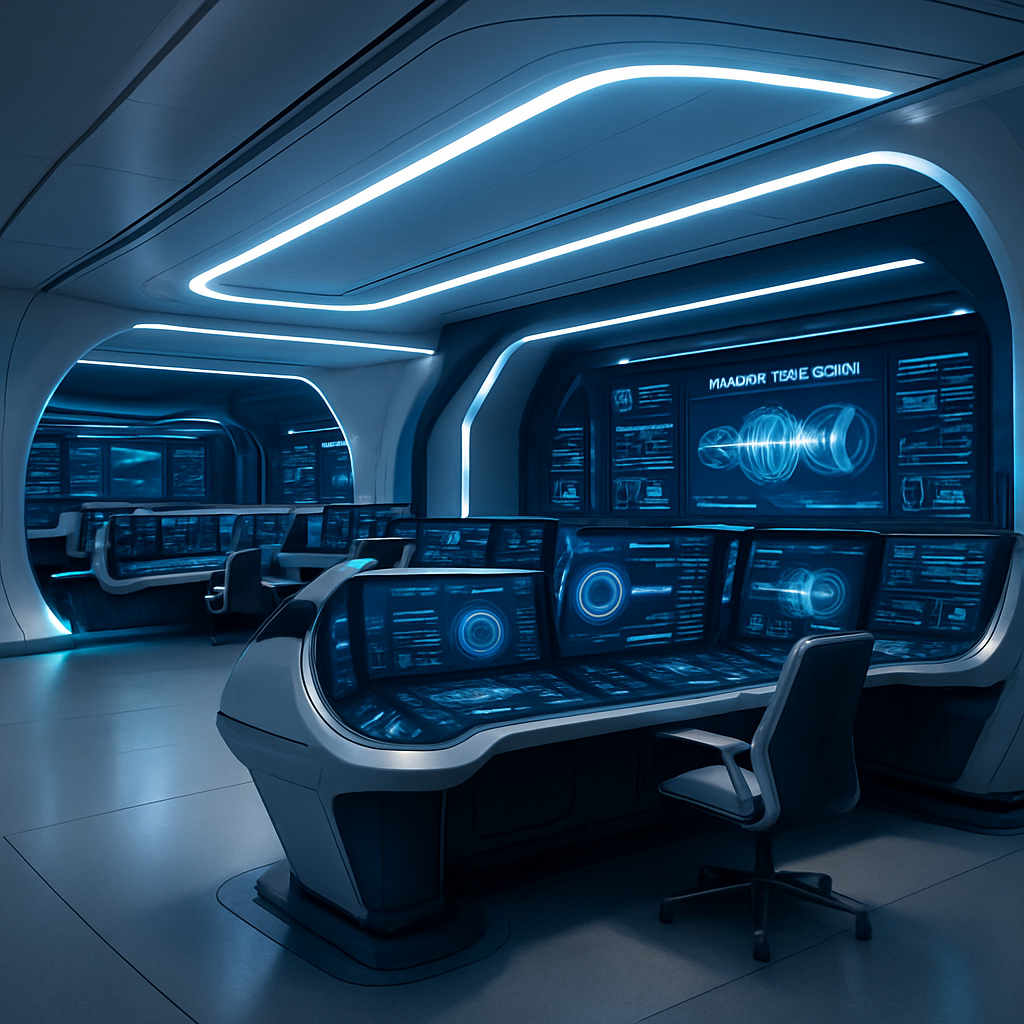
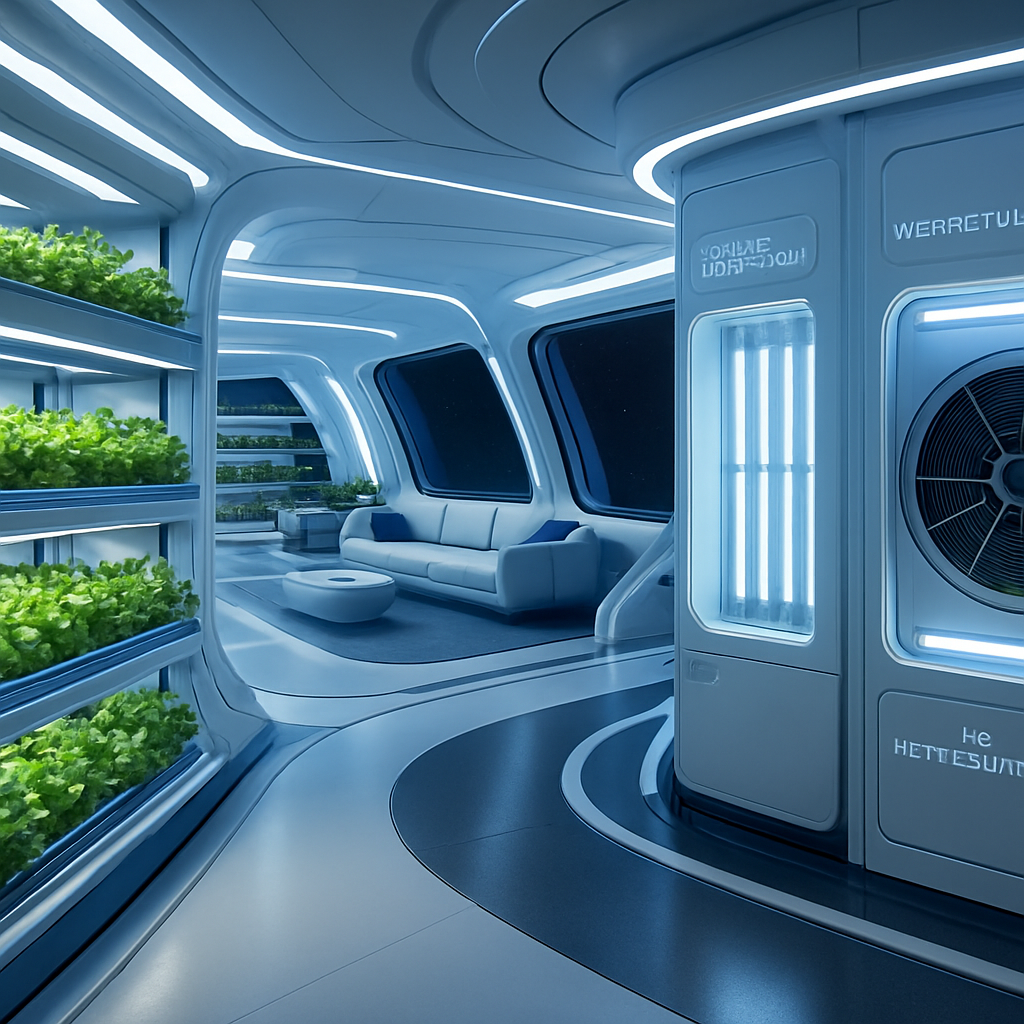
We validate flagship‑scale assumptions through simulation, underwater habitat testing, and orbital subsystem demonstrators. Qualification targets include population‑scale recycling reliability, resilient thermal margins, and safe degraded‑mode operations for 1,000+ residents.
Flagship Architecture Study
This concept study imagines a premium, curved white-and-blue interior language where districts, power, and public life are orchestrated around a luminous command backbone. The architecture below is aspirational and forward-looking, outlining how a population-scale ship could balance elegance, resilience, and operational clarity for multi‑year voyages.
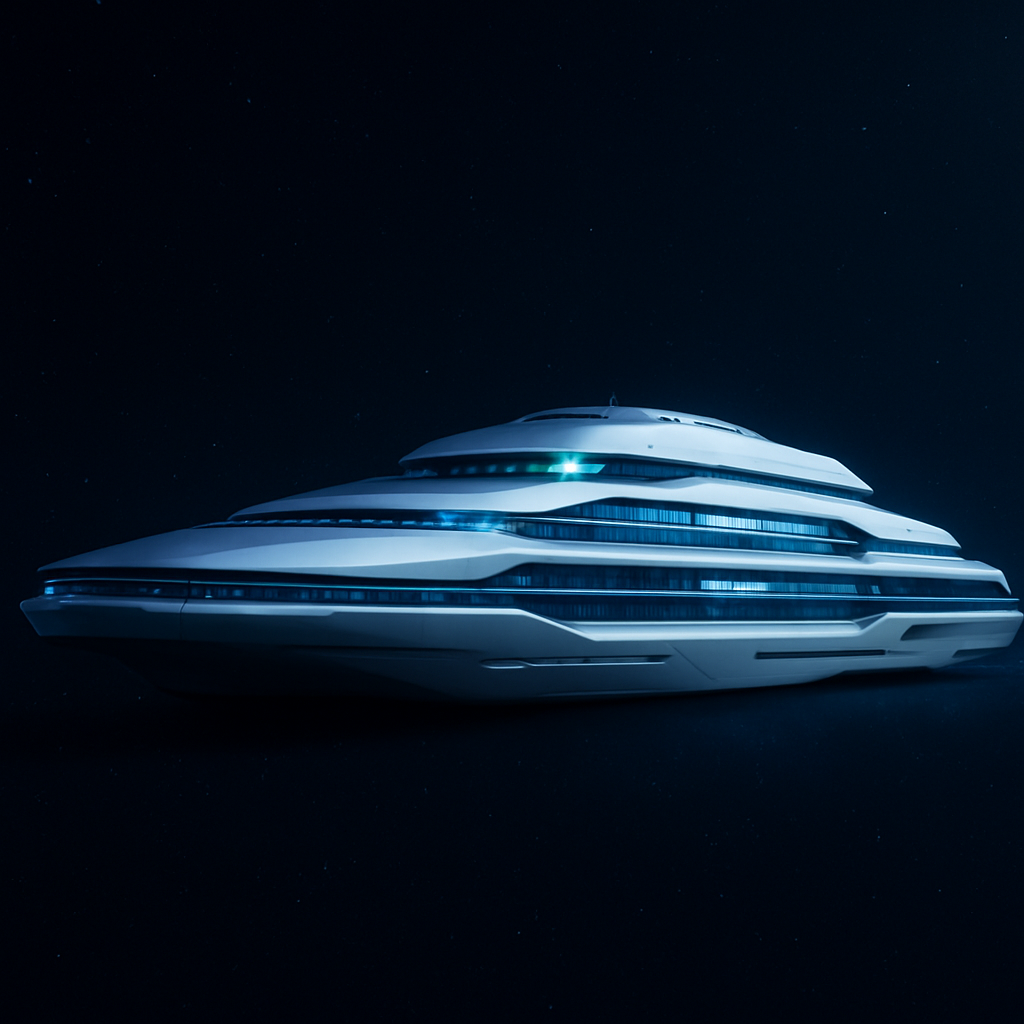
Grand command deck integration
A unified operations promenade aligns propulsion, medical, habitat, and research telemetry into a single panoramic view, designed for graceful scaling as this flagship concept advances from study to prototype.
Residential districts arranged around quiet gardens, education studios, and cultural halls to preserve privacy while supporting a thriving flagship community.
Large-scale medical suites, biosafety labs, and clinical research corridors designed to protect population health and enable discovery at cruise scale.
Grand amphitheaters, dining promenades, and observation lounges provide uplifting civic life without compromising mission discipline.
Curved viewing galleries and controlled-light domes frame celestial vistas while preserving structural integrity and radiation protection.
Multiple closed-loop plants handle air, water, and thermal loads per district, maintaining resilience through isolation and cross-feed capability.
Layered generation, storage, and power distribution supports propulsion, habitat districts, and research decks with graceful load management.
Population-scale refuge halls co-located with critical stores allow rapid transfer during solar activity while sustaining medical operations.
Dedicated logistics corridors and autonomous maintenance networks move supplies, manage repairs, and scale service across the flagship.
Predictive inventory control and resource recovery loops maintain food, water, and medical supplies for a thousand-plus residents.
Poseidon Space & Sea Institute connects researchers, students, educators, and mission-aligned partners to accelerate sustainable innovation. Join open research programs, co-develop prototypes, and share expertise that strengthens both marine ecosystems and space exploration.
Support the mission
Fuel ocean‑space breakthroughs with transparent, mission‑centered giving. Every contribution is tracked to a funded initiative, with progress updates and open data so you can see how your support advances sustainable ocean‑space technology.
Expand autonomous ocean sensors, satellite‑driven mapping, and prototype testing across extreme environments.
Provide scholarship seats, educator toolkits, and student research pathways in ocean‑space engineering.
Equip regional labs with shared instrumentation and data systems for collaborative discoveries.
Accelerate climate‑ready tools for coastal monitoring, reef restoration, and sustainable blue economies.
A monthly gift can sustain sensor maintenance, data processing, and student field placements. One‑time contributions are directed to rapid‑response research needs, from satellite calibration to ocean expedition fuel. Every level supports the shared goal: actionable science for a thriving planet.
R100 — equips a student researcher with ocean sampling kits.
R500 — funds a week of satellite‑ocean data processing.
R1000 — powers a community lab session for local educators.
Choose your level
Join researchers, alumni, and supporters investing in a safer, smarter future for ocean and space exploration. Select a structured option or give a custom amount.
Contributions are directed to science, education, and community lab operations, with transparent reporting.
Impact at a glance
Measured progress grounded in peer-reviewed research, accredited education, and interdisciplinary collaboration. Each metric reflects verifiable activity and growing global participation.
Latest verified cycle
FY2026 performance summary
Figures represent active programs and participants across our labs, field stations, and online learning community.
28
Integrated missions spanning coastal resilience, orbital sensing, and deep-sea robotics, space craft engineering.
19
Operational nodes connecting ocean observatories, orbital data relays, and autonomous test ranges.
62
Universities, agencies, and private labs co-developing shared infrastructure.
38k+
Learners and citizen scientists engaged through workshops, missions, and open data.
Knowledge Center
Clear answers to common inquiries about our research, education programs, collaboration pathways, and how your support accelerates ocean-space innovation.